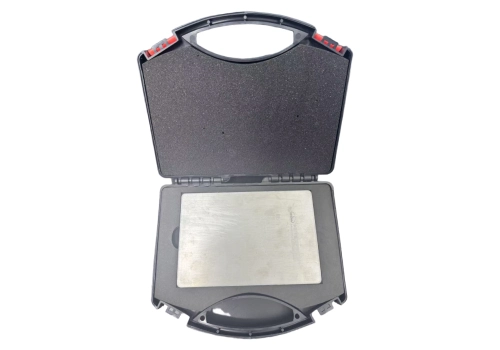
α,β area source
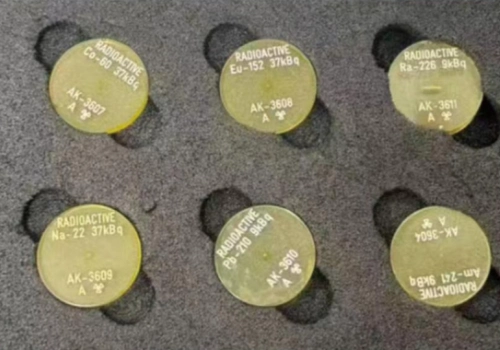
Radioactive nuclides (such as ⁹⁰Sr/⁹⁰Y, ²³⁹Pu, ¹⁴C, ²⁴¹Am, etc.) are evenly fixed on the surface of the substrate through electroplating, anodizing filling or deposition methods to form a thin active area. The surface is covered with an extremely thin protective film (such as TiO₂, pyrolytic chromium or aluminum film) to prevent radioactive materials from falling off while allowing rays to pass through. It is mainly used to calibrate α/β surface contamination meters, γ spectrometers, large-area radiation detectors, etc. to determine detection efficiency and counting response.